

Fresh capital will scale Analyzer deployment across North America and Europe, as regulators and brands lean increasingly on AI-derived data to measure and price secondary materials.
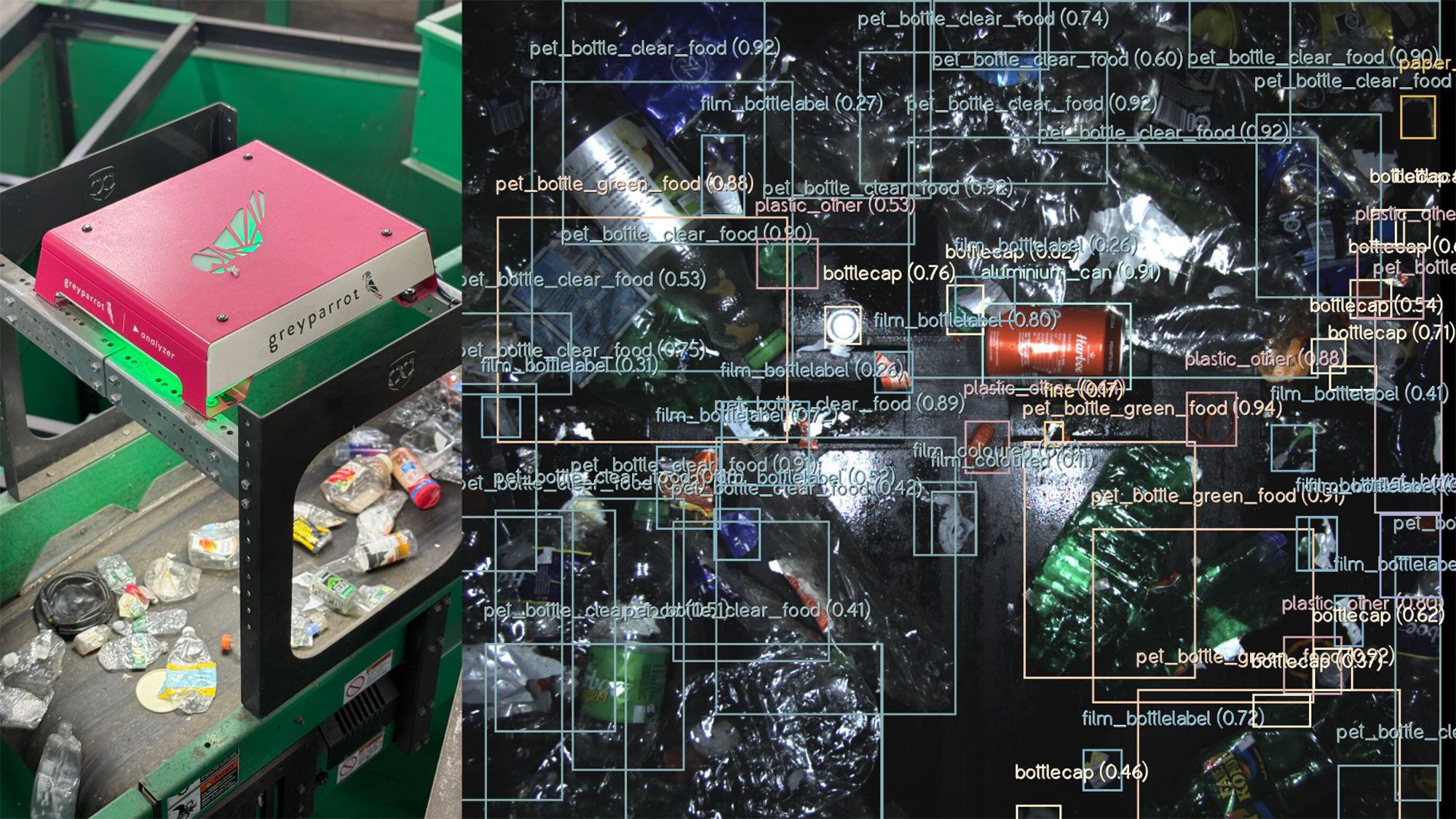
Greyparrot, the London-based AI waste intelligence company, has raised $27 million (£20 million) in Series B funding led by technology investor Omar Mir, taking its total funding to $60 million (£45 million), the company said on Tuesday.
The round comes as Greyparrot's technology has detected more than one trillion waste objects since deployment.
The company said the new funding will expand Analyzer installations across North America and Europe and grow its AI, data science and product teams, with a target of abating more than one million tonnes of waste by 2030.
Greyparrot's Analyzer camera systems sit above sorting belts in recycling facilities across more than 20 countries, identifying materials, products and brands in real time. The systems replace periodic manual sampling with data refreshed every shift, showing operators what materials are moving through the line and how much of the recoverable fraction is actually being captured rather than lost to residual waste.
Waste and recycling companies use the technology to monitor material quality and strengthen compliance audits, among them the US waste operator WM (formerly Waste Management) and Circular Services, North America's largest privately owned recycler, alongside Veolia, Biffa and FCC in Europe. Greyparrot says operators use that visibility to improve yield and adjust operations accordingly, with facilities reporting efficiency gains of between 10 and 30 per cent and one site saving more than £1.5 million in a year.
"Waste is one of the planet's largest untapped resources, and data is the infrastructure that unlocks it," said Mikela Druckman, co-founder and chief executive of Greyparrot. "This funding lets us scale rapidly across North America and Europe and grow our AI, data science and product teams."
In the UK, the Environment Agency accepted Greyparrot-derived waste composition data in statutory compliance submissions for the first time in the first quarter of 2026, in filings from customers Biffa and FCC Environment.
Consumer goods companies including Unilever, L'Oréal and Kenvue use Greyparrot's Deepnest platform to inform packaging redesign and gauge exposure to fees under UK Extended Producer Responsibility and the EU Packaging and Packaging Waste Regulation.
Less than 0.1 per cent of the world's estimated 2.3 billion tonnes of annual solid waste is currently audited, according to Greyparrot, leaving operators, brands and policymakers with limited visibility into where valuable materials are lost. Pew and Systemiq estimate that between $80 billion and $120 billion (roughly £60 billion to £90 billion) of plastic value is lost through linear systems each year.
Across its network, drawn from more than one trillion detections, the company estimates the materials identified by its Analyzers represent about £1.87 billion in recoverable value, including 17.4 billion PET bottles and 4.2 billion aluminium items.
The World Economic Forum's Global Risks Report 2026 names confrontation over natural resources among the top global risks of the next two years, with resource shortages ranked among the most severe threats of the decade.
"Waste intelligence will do for materials what satellite data did for navigation," said Ambarish Mitra, co-founder of Greyparrot. "Once you can measure a material, you can trade it and invest in it. That is when the circular economy stops being an ambition and becomes infrastructure."




Get our weekly digest
resource.co article ai

How will the government and DMOs address the challenges of including glass in DRS while ensuring a level playing field across the UK?
There's no easy solution to include glass in the DRS while maintaining a level playing field. Potential approaches include a phased introduction of glass, potentially with higher deposits to reflect its logistical challenges. The government and DMOs could incentivise innovation in glass packaging design and subsidise dedicated return points for glass-handling. Exemptions for smaller businesses unable to handle glass might also be necessary. Any successful solution will likely blend several approaches. It must address the differing priorities of devolved administrations, balance environmental benefits with logistical and cost implications, and be supported by robust consumer education campaigns emphasizing the importance of glass recycling.