

ReLondon-led Food's Not Rubbish campaign arrives three months after Simpler Recycling made weekly food waste collections a legal requirement for English councils, with Defra-backed evaluation of hyper-local pilots due in early 2027.
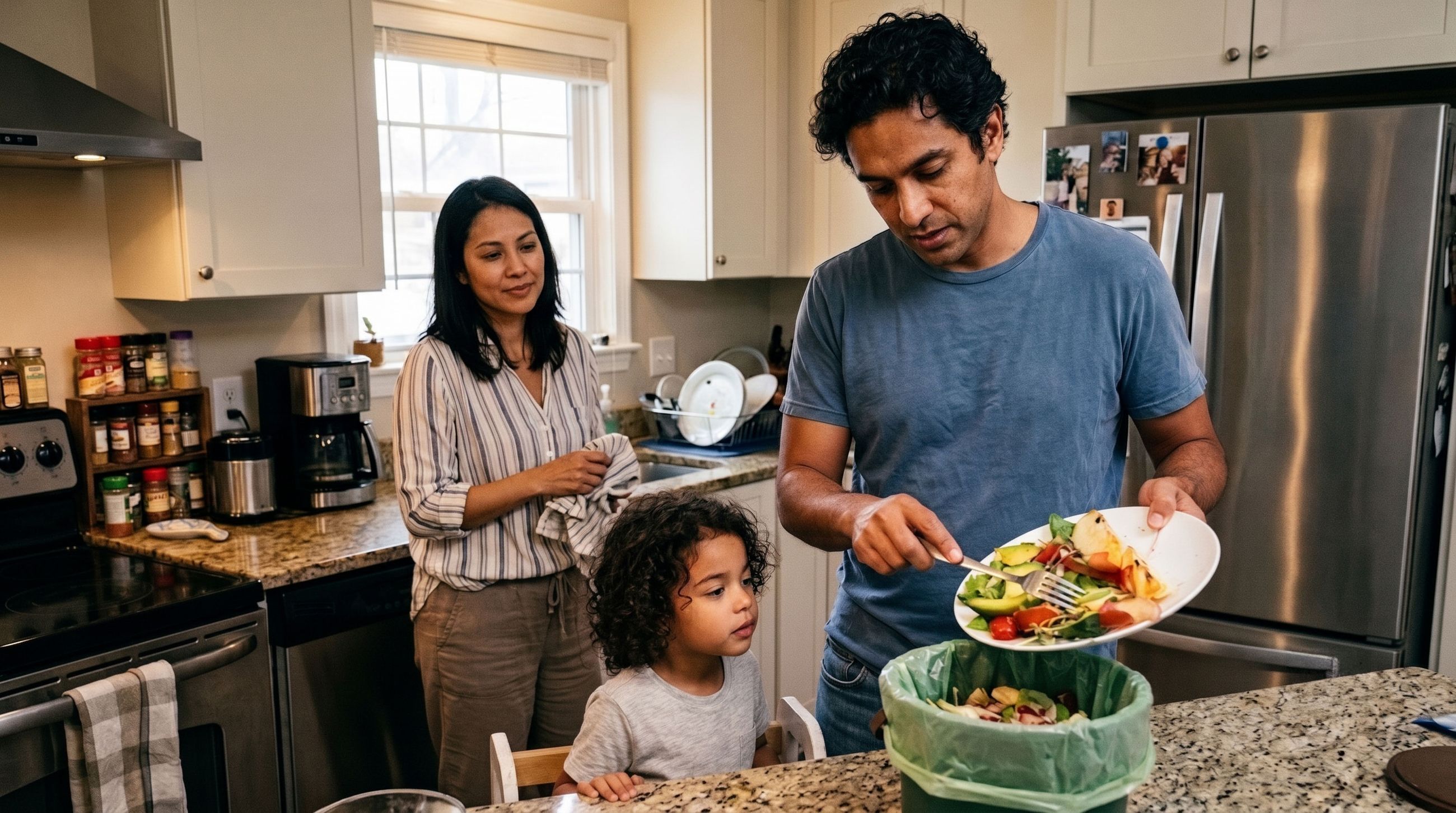
Seventeen London boroughs have jointly funded a new food waste campaign, Food's Not Rubbish, to be delivered by ReLondon with paid radio and digital advertising across the capital.
The campaign, which launched this week (29 June), will run an initial phase of paid media for three weeks, with a second planned from 1 October. Supporting this, a dedicated website and social media channels on Instagram and Facebook will carry organic content (no pun intended) around three themes - planning meals, saving food and recycling what remains.
Food's Not Rubbish draws on a behavioural science technique known as dynamic social norming - communicating a trend, i.e. that growing numbers of people are adopting the behaviour. The approach, which contrasts with traditional social norm messaging (that tells people most others already perform a behaviour, e.g. "nine out of ten of your neighbours recycle") is designed for situations where the target behaviour is not yet the majority behaviour, and telling people they are in a minority can, paradoxically, discourage participation. In this case, the campaign aims to persuade residents that more and more Londoners are recycling their food waste, and shows people in everyday kitchens doing it in their own way.
The campaign arrives three months after Simpler Recycling required all English councils to offer weekly household food waste collections from 31 March 2026. Around 63 per cent of councils were collecting food waste as the deadline passed, with a quarter of English local authorities not yet ready to meet the requirement.
Alongside the capital-wide advertising, four hyper-local neighbourhood pilots are running in Camden, Ealing, Hackney and Islington. These are intended to test what kinds of messaging are most effective with specific demographics - particularly young people living in flats, residents on lower incomes and people from diverse communities. Defra has provided funding and support for the pilots and a formal evaluation, with findings due to be shared with local authorities across England in early 2027.
On the campaign website, content is organised into plan, save and recycle sections, with a borough-specific lookup showing what food waste collection arrangements apply in each participating area. Its planning section is largely a curated collection of external tips and recipes from sources including BBC Good Food, Love Food Hate Waste, Jamie Oliver and various Instagram food accounts, alongside a handful of short original tips on meal prep, freezing and portion control.
Participating boroughs are Barnet, Bexley, Camden, Ealing, Enfield, Hackney, Hammersmith and Fulham, Haringey, Hillingdon, Islington, Kensington and Chelsea, Lewisham, Merton, Richmond, Waltham Forest, Wandsworth and Westminster, along with the North London Waste Authority.


Get our weekly digest
resource.co article ai

How will the government and DMOs address the challenges of including glass in DRS while ensuring a level playing field across the UK?
There's no easy solution to include glass in the DRS while maintaining a level playing field. Potential approaches include a phased introduction of glass, potentially with higher deposits to reflect its logistical challenges. The government and DMOs could incentivise innovation in glass packaging design and subsidise dedicated return points for glass-handling. Exemptions for smaller businesses unable to handle glass might also be necessary. Any successful solution will likely blend several approaches. It must address the differing priorities of devolved administrations, balance environmental benefits with logistical and cost implications, and be supported by robust consumer education campaigns emphasizing the importance of glass recycling.