

Grants of £6,000 a site and extended exemptions are intended to help small retailers choose between installing a reverse vending machine and opting out before the 2027 launch.
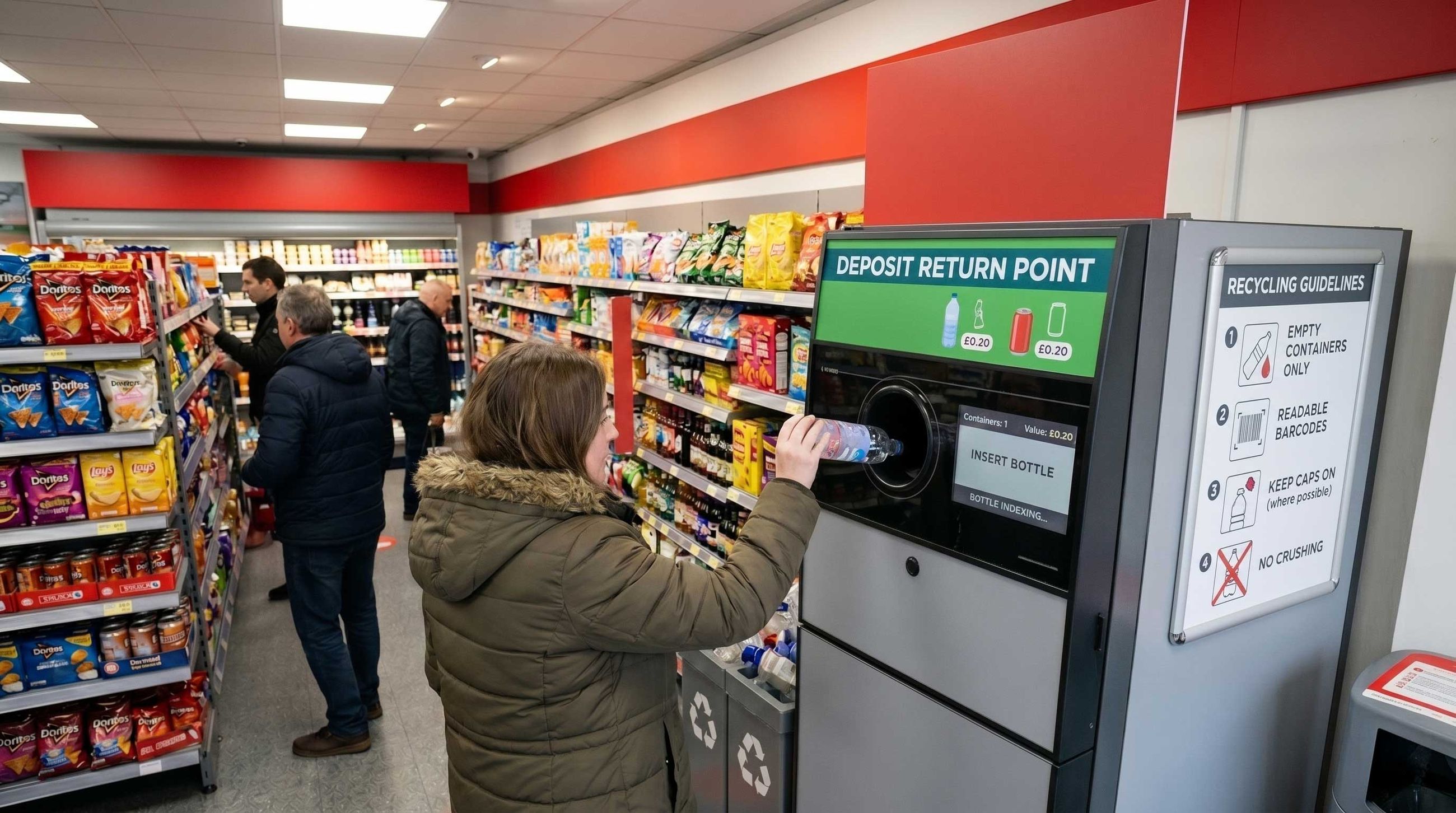
Exchange For Change, the industry-led body delivering the deposit return scheme across England, Scotland and Northern Ireland, has confirmed £60 million in grants to help up to 10,000 small retailers install reverse vending machines, alongside a widening of exemptions for shops that do not want to host a return point.
Qualifying small independent retailers can claim £6,000 per site, paid in three annual instalments of £2,000, with the first due three months after a machine is installed. The scheme, which covers PET plastic, steel and aluminium drinks containers between 150ml and 3 litres, launches in October 2027.
The obligation to host a return point open to all shoppers falls on a category the regulations call a "groceries retailer", which covers a supermarket, grocery store, convenience store or newsagent. Those in urban areas with a sales floor below 100 square metres are automatically exempt. Exchange For Change has agreed with regulators in all three nations to let urban retailers between 100 and 199 square metres, and rural retailers below 200 square metres, apply for a size-based exemption, with further exemptions available on grounds of proximity to another return point, listed-building or heritage restrictions, site access or a lack of utilities.
This flexibility will give more retailers a choice over whether to take part with approval depending on whether there are enough return points being available locally. Groceries retailers with a sales area of 200 square metres or more can also apply on size grounds, though Exchange For Change says the presumption will be against granting them an exemption.
The definition excludes hospitality venues, takeaways, and leisure and entertainment sites such as gyms, cinemas and amusement arcades, along with online retailers and vending operators. These businesses do not have to run return points, but must still charge the deposit on drinks sold for consumption off the premises; where drinks are consumed on site, containers can be kept for collection under a closed-loop arrangement rather than returned by customers.
The support follows last week's confirmation of the Return Handling Fee, the per-container payment retailers receive for taking containers back. It is set at 3p for manual return points, 5p for the first 225,000 items returned each year through a reverse vending machine, and 1.3p for anything above that. The fee is designed to help cover equipment, staff training and the floor space given over to collection and storage. Exchange For Change set the rate after consulting industry and says it will be reviewed early next year, before launch, and annually thereafter.
"This package of support has been developed following extensive consultation with industry and intended to help retailers of different sizes make the best choice for their business, whether that is installing a reverse vending machine or applying for an exemption," said Russell Davies, chief executive of Exchange For Change.
Detailed eligibility criteria for the grants and guidance on applying for exemptions will be published in the third quarter of 2026.


Get our weekly digest
resource.co article ai

How will the government and DMOs address the challenges of including glass in DRS while ensuring a level playing field across the UK?
There's no easy solution to include glass in the DRS while maintaining a level playing field. Potential approaches include a phased introduction of glass, potentially with higher deposits to reflect its logistical challenges. The government and DMOs could incentivise innovation in glass packaging design and subsidise dedicated return points for glass-handling. Exemptions for smaller businesses unable to handle glass might also be necessary. Any successful solution will likely blend several approaches. It must address the differing priorities of devolved administrations, balance environmental benefits with logistical and cost implications, and be supported by robust consumer education campaigns emphasizing the importance of glass recycling.