

Partnership pairs domestic precious metals recovery with offender rehabilitation programme that reports a five per cent reoffending rate across 12 prisons.
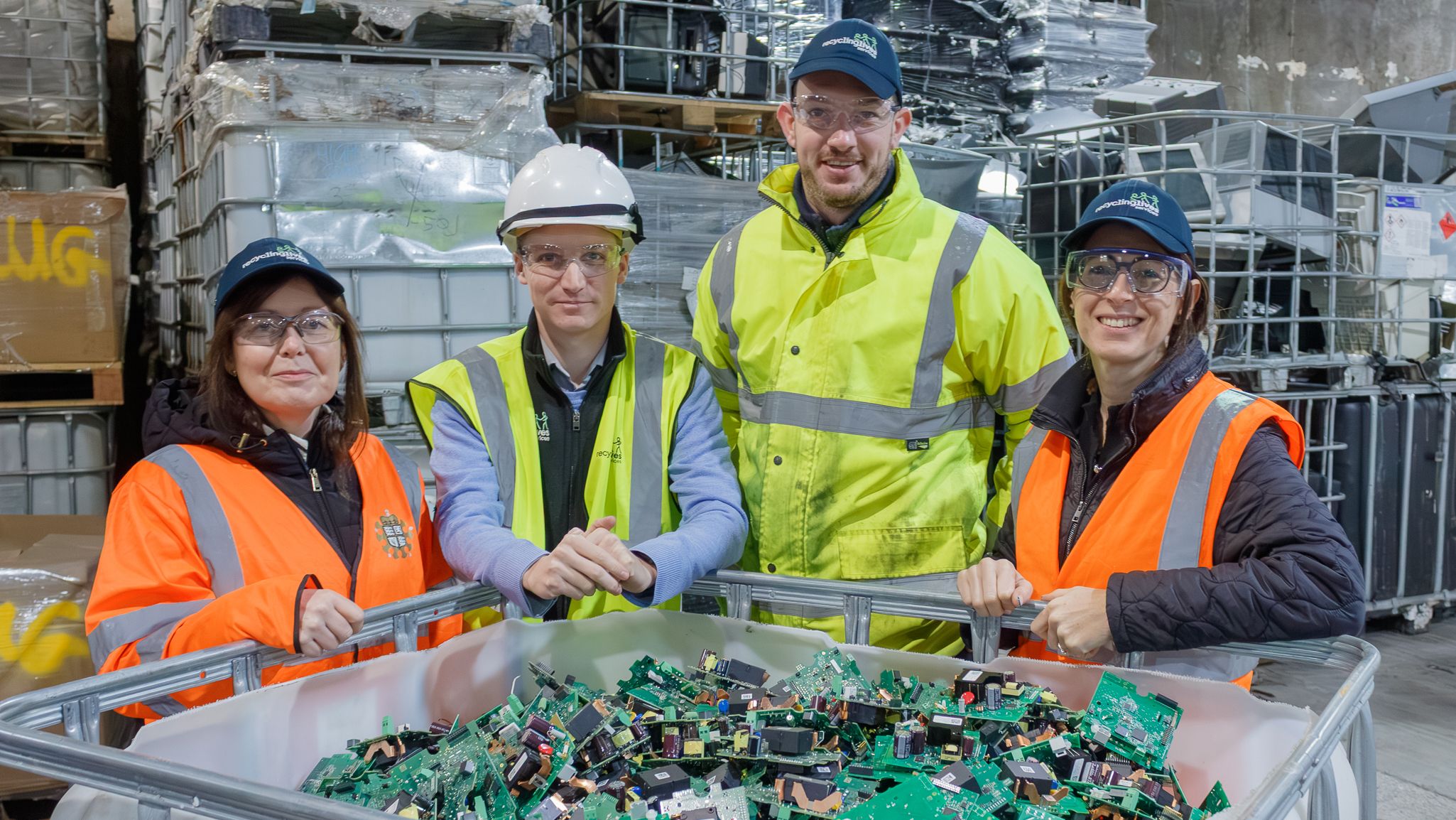
The Royal Mint has partnered with Recycling Lives Services to recover gold and platinum group metals from circuit boards stripped out of end-of-life televisions at civic amenity sites across the UK.
Under the arrangement, e-waste collected at household waste recycling centres is sent to Recycling Lives' Preston facility, where it is dismantled manually in supervised prison-industry workshops. The extracted circuit boards are then transferred to the Royal Mint's Reformation Metals plant in Llantrisant, south Wales, for precious metals recovery.
The Llantrisant facility, which can process up to 4,000 tonnes of printed circuit boards a year, uses patented room-temperature chemistry developed with Canadian cleantech firm Excir to extract gold at purities of 999.9 parts per thousand. The process also recovers silver, palladium and copper without the high-temperature smelting that conventional precious metals recovery requires.
Sean Millard, Chief Growth Officer at the Royal Mint, said Recycling Lives' feedstock had "enabled us to continue sourcing high-quality precious metals from e-waste across the UK", adding that the social impact model "adds further value to a partnership advancing a more circular economy".
Recycling Lives operates dismantling workshops in 12 prisons across the UK. Participants who complete the programme have a reoffending rate of five per cent, against a national average of around 50 per cent. The workshops give prisoners transferable skills in materials identification and manual separation ahead of release.
Adrian Murphy, Chief Executive Officer at Recycling Lives Services, said the partnership was "recovering valuable materials from UK e-waste while supporting a rehabilitation model that creates practical routes towards employment for prisoners preparing for release".
Each batch of circuit boards is graded, itemised and verified by Recycling Lives before dispatch, giving the Royal Mint the traceability and consistent material quality its extraction process requires.
The arrangement sits alongside the government's Critical Minerals Strategy, published in November 2025, which set a target for 20 per cent of UK critical mineral demand to be met through recycling by 2035 and committed £50 million in funding support. Keeping precious metals from e-waste within the UK rather than exporting circuit boards to overseas smelters is one of the routes the strategy identifies for reducing import dependence.


Get our weekly digest
resource.co article ai

How will the government and DMOs address the challenges of including glass in DRS while ensuring a level playing field across the UK?
There's no easy solution to include glass in the DRS while maintaining a level playing field. Potential approaches include a phased introduction of glass, potentially with higher deposits to reflect its logistical challenges. The government and DMOs could incentivise innovation in glass packaging design and subsidise dedicated return points for glass-handling. Exemptions for smaller businesses unable to handle glass might also be necessary. Any successful solution will likely blend several approaches. It must address the differing priorities of devolved administrations, balance environmental benefits with logistical and cost implications, and be supported by robust consumer education campaigns emphasizing the importance of glass recycling.