

Eighteen-month study spanning Europe, Ghana and Pakistan maps the economic and social barriers preventing rewearable clothing from reaching its resale potential, and tests whether AI-enabled sorting can close the gap.
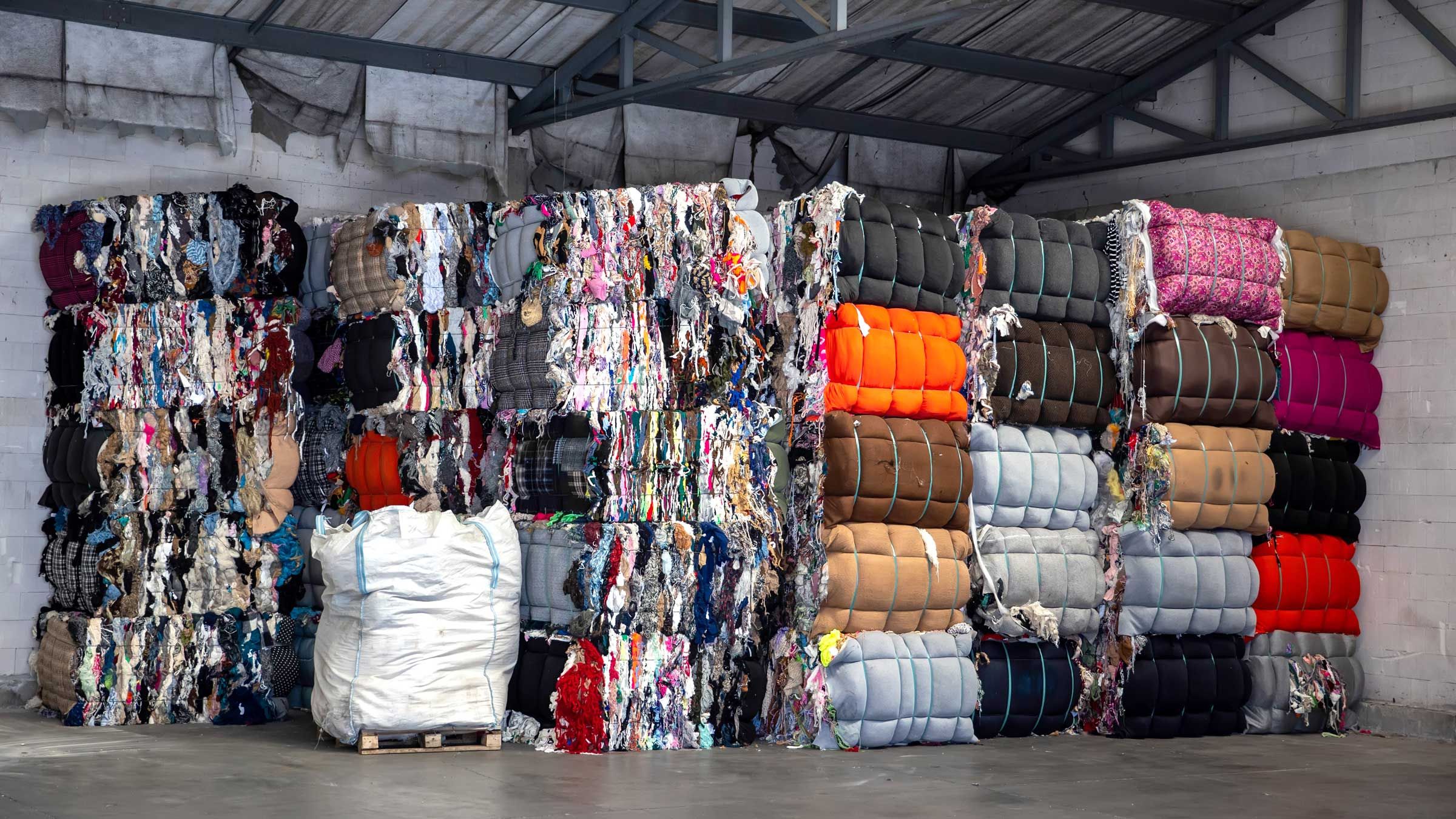
Fashion for Good and Circle Economy, a circular economy advisory organisation, have published a report examining why most clothing discarded in Europe never reaches secondhand markets despite being physically fit for reuse. Project Rewear, released this month, analysed 8,280 post-consumer garments from sorting facilities in the Netherlands, Spain, Poland and Lithuania and found that 37 per cent had no identifiable damage, with a further 41 per cent showing only minor flaws such as small stains or pilling.
Physical condition, the study concluded, has no statistically significant link to resale value. A garment's grade and price are determined by brand recognition, fashion trends and perceived desirability. Only the top 5-10 per cent of sorted stock - classified as "cream" or Grade A - commands premium prices of between €4.50 and €6 per kilogram. Roughly half falls into Grade B, sold at €0.45-2.10 per kilogram, while up to 40 per cent is classified as non-rewearable and enters recycling or waste streams at €0.03-0.40 per kilogram.
Sorters taking part in the study say this is due to a steady decline in the quality of clothes put on the market over the past 15 years, a trend they linked to the growth of fast fashion. H&M was the most frequently represented brand in the sample at 3.3 per cent of the total, followed by Zara, adidas and Levi Strauss & Co., but no single brand dominated. Sixteen per cent of garments had no identifiable brand at all.
Repair remains economically marginal
Preparation for reuse - cleaning, depilling and minor repair - could in principle extend the life of much of this stock, but the economics do not support it at scale. Under current market conditions, even minor repairs often cost more than the resale price justifies. One sorting facility in the study repaired only 50 kilograms out of approximately 47,000 tones collected annually in 2023.
An innovation pilot run with the United Repair Centre (URC), a social enterprise based in the Netherlands, tested whether targeted repair could create measurable value. Of 164 garments repaired and sold through a secondhand retail partner in Antwerp, only 18 achieved a positive margin after accounting for repair and logistics costs. Outerwear and denim performed best, but for lower-value fast fashion items the downward pressure from cheap new clothing made repair financially unviable.
AI sorting tested
A separate pilot with reverse.fashion, a Berlin-based sorting technology firm, tested whether AI-enabled, demand-driven sorting could improve the economics of secondhand textile processing. The company's line.sort system uses computer vision to capture near-360-degree garment images and classify items by condition, style, brand, colour and season at speeds of up to two metres per second.
Compared with manual multi-step sorting, line.sort demonstrated 40 per cent higher productivity per unit with annual personnel cost savings of up to €90,000 (around £76,000) per sorting line. Applied across a mid-sized facility processing 30,000 tonnes a year with 25 sorting lines, the modelling showed revenue rising from €20 million to €25 million (around £17 million to £21 million) and profit shifting from zero to €6.5 million (around £5.5 million).
The gains come from more accurate identification of higher-value fractions. AI-driven precision increased the vintage fraction by 1.5 percentage points and the cream fraction by 0.5 points - shifts that appear marginal but become significant at €13 per kilogram for curated vintage assortments.
Save Your Wardrobe, an aftersales platform, ran a third pilot that produced an open-source diagnostics tool for brands to identify cost-effective repair and care options, cutting aftersales lead times from 21 days to three.
EU exports and their destination markets
Project Rewear also commissioned field research in Ghana and Pakistan, two of the largest destination countries for textile exports. (In total, EU exports of used textiles have tripled since 2000, reaching nearly 1.7 million tonnes by 2023, with around 46 per cent going to Africa and 41 per cent to Asia.)
At Accra's Kantamanto Market, where an estimated 15 million garments arrive every fortnight, researchers sampled 2,474 garments from bales classified as rewearable on import. Some 86.5 per cent showed damage - faded fabric, stains, loose joints, missing buttons. Prices ranged from GHS 3 to GHS 100 per piece (approximately €0.20 to €7), but traders bear the financial risk of bales whose contents they cannot inspect before purchase.
Pakistan imports more than 800,000 tonnes of secondhand clothing annually, processed primarily through the Karachi Export Processing Zone (KEPZ) before distribution domestically or re-export to East Africa. The KEPZ employs over 10,000 people, around half of them women, but outside the zone much of the work is informal and unregulated. The country's secondhand clothing export values have risen from around US$200 million (approximately £160 million) in 2019 to nearly US$300 million (approximately £240 million) in 2023.
Both case studies found that items classified and shipped as "rewearable" according to their customs code frequently include poor-quality or culturally misaligned garments that end up as waste in countries with limited disposal infrastructure. The report described this as a transfer of waste management costs from high-consumption countries to low-income ones.
Policy context
The EU's revised Waste Framework Directive (WFD), which entered into force on 16 October 2025, made EPR for textiles mandatory, with member states having 30 months to establish their EPR schemes, with eco-modulated fees designed to penalise low-durability, hard-to-recycle products. Mandatory separate collection of textiles, introduced under the 2018 WFD revisions, took effect on 1 January 2025.
Project Rewear's authors argued that current EPR frameworks provide insufficient funds for sorting and preparation for reuse, and that fees do not flow to actors outside the EU who bear much of the end-of-life cost. Without eco-modulated fees that reward preparation for reuse and without cross-border financing mechanisms, the report concluded, most technically rewearable garments will continue to lose value before reaching a buyer.


Get our weekly digest
resource.co article ai

How will the government and DMOs address the challenges of including glass in DRS while ensuring a level playing field across the UK?
There's no easy solution to include glass in the DRS while maintaining a level playing field. Potential approaches include a phased introduction of glass, potentially with higher deposits to reflect its logistical challenges. The government and DMOs could incentivise innovation in glass packaging design and subsidise dedicated return points for glass-handling. Exemptions for smaller businesses unable to handle glass might also be necessary. Any successful solution will likely blend several approaches. It must address the differing priorities of devolved administrations, balance environmental benefits with logistical and cost implications, and be supported by robust consumer education campaigns emphasizing the importance of glass recycling.