

Charity partners with Defra and the Environment Agency to gather public intelligence on organised dumping, which the waste industry estimates costs the UK economy £1 billion a year.
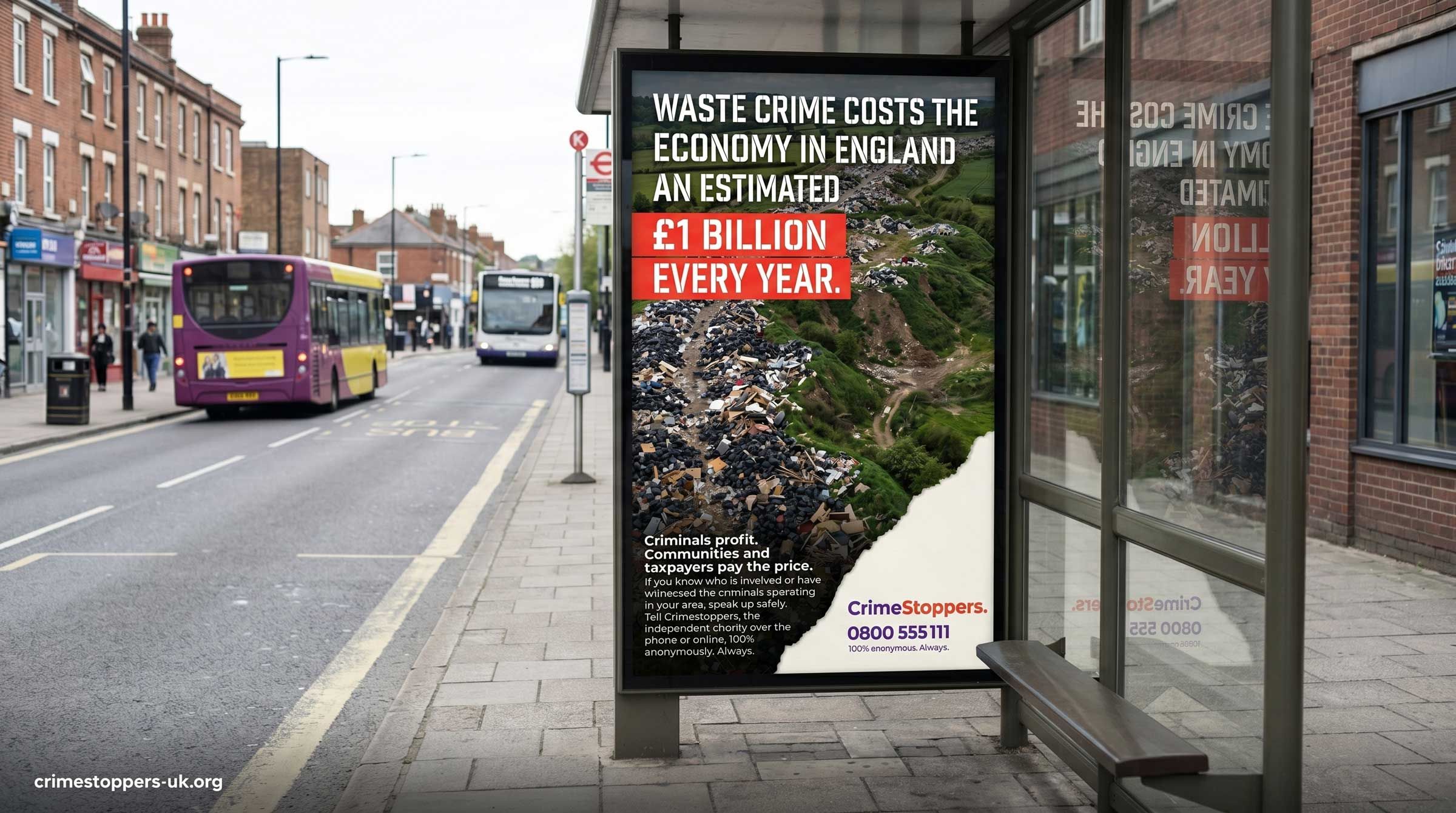
Crimestoppers has launched a national campaign with Defra and the Environment Agency calling on the public to report waste crime anonymously, after research for the charity found nearly two-thirds of people in England had witnessed it in the past year.
The YouGov survey of 1,761 adults in England, carried out on 6 and 7 May, found that 52 per cent had seen dumped household or commercial waste in their local area, while 23 per cent had encountered illegal waste sites or dumping on land.
The research also recorded how waste crime affects the communities living alongside it. More than half of respondents, 53 per cent, said it negatively affected their quality of life, and 45 per cent said it made their local area feel unsafe.
"Waste crime is not a harmless crime. It is often driven by organised crime gangs making huge profits at the expense of our communities and environment," said Kate Johnston, from Crimestoppers. "The fact that so many people are seeing this in their local area shows just how widespread the issue has become."
Defra treats waste crime as a serious and growing form of organised crime. It recorded more than 52,000 large-scale fly-tipping incidents, each equivalent to a tipper lorry load or more, in 2024/25, at a clearance cost to councils of £19.3 million. The Environmental Services Association, which represents the waste and recycling industry, estimates that waste crime costs the UK economy around £1 billion a year.
The campaign focuses on the organised operations behind large-scale dumping rather than everyday fly-tipping, asking the public to pass on what they know about those responsible.
Crimestoppers operates independently of the police and says it takes information anonymously, without asking for personal details or recording anything that could trace the source. The charity highlights that people are often deterred from coming forward by uncertainty or fear of repercussions, which its anonymity guarantee is intended to address.
The campaign is part of the government's Waste Crime Action Plan, set out by Defra in March, which aims to take a zero-tolerance approach built around prevention, enforcement and clean-up. Among its measures, digital waste tracking will become mandatory from October 2026, and the Environment Agency is going to receive an additional £45 million for enforcement. When making the announcement, Mary Creagh, the Defra minister responsible for the circular economy, said waste crime "blights our towns, cities and countryside" and urged anyone who saw it to report it.
Philip Duffy, chief executive of the Environment Agency, said its 10-point plan to address waste crime, which includes faster responses to reported dumping and more coordinated intelligence gathering, was strengthening enforcement and disrupting criminal activity, but that intelligence from the public remained vital. "We have seen how members of the public often have valuable information about suspicious activity but feel unable to come forward," he said.


Get our weekly digest
resource.co article ai

How will the government and DMOs address the challenges of including glass in DRS while ensuring a level playing field across the UK?
There's no easy solution to include glass in the DRS while maintaining a level playing field. Potential approaches include a phased introduction of glass, potentially with higher deposits to reflect its logistical challenges. The government and DMOs could incentivise innovation in glass packaging design and subsidise dedicated return points for glass-handling. Exemptions for smaller businesses unable to handle glass might also be necessary. Any successful solution will likely blend several approaches. It must address the differing priorities of devolved administrations, balance environmental benefits with logistical and cost implications, and be supported by robust consumer education campaigns emphasizing the importance of glass recycling.