

Swedish research comparing three production pathways for synthetic aviation fuel finds that the EU’s RFNBO classification penalises the most resource-efficient option - biomass gasification.
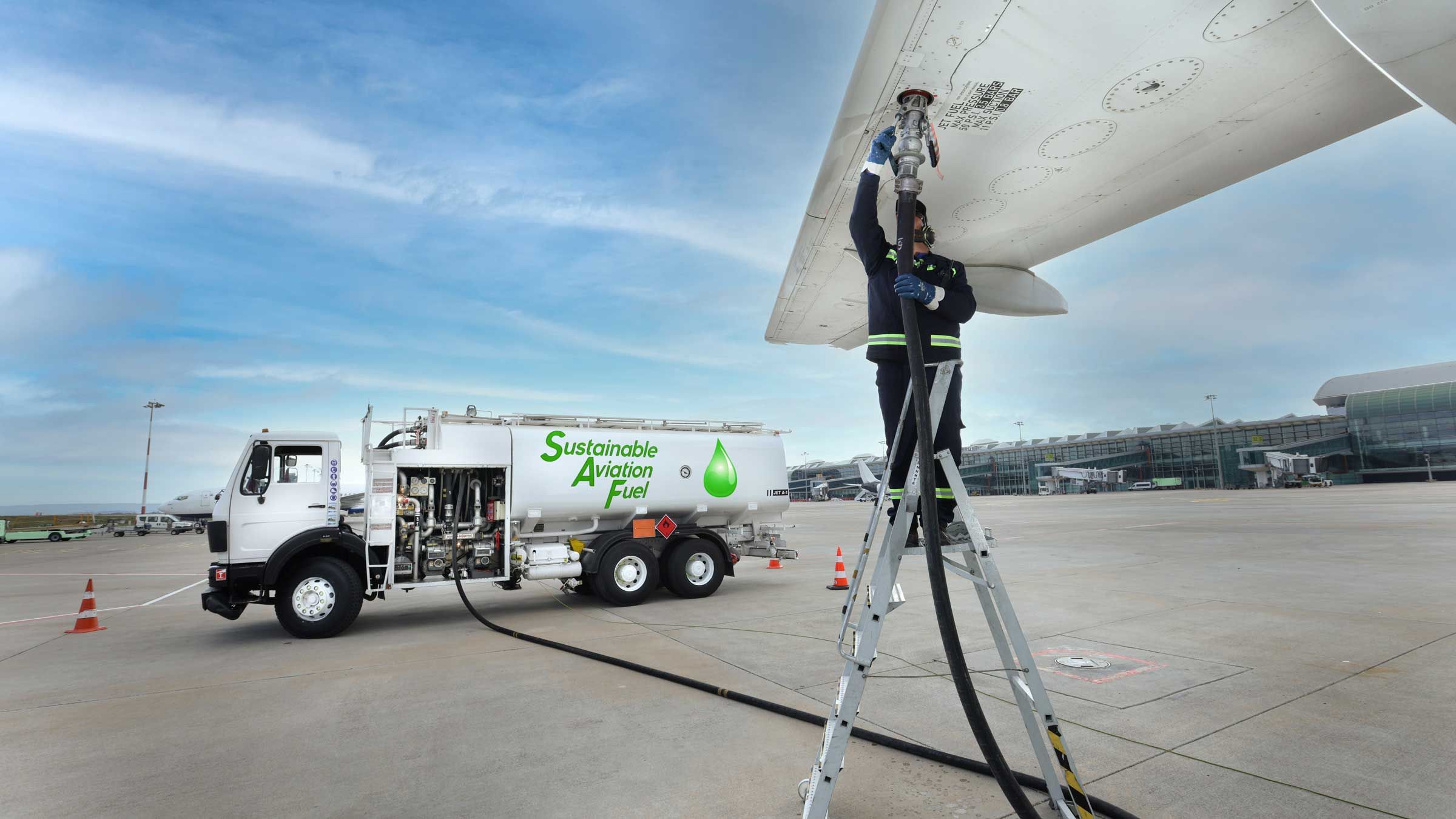
EU regulations governing fossil-free aviation fuel risk locking the industry into production methods that are costlier and less energy-efficient than available alternatives, according to research published in the journal Fuel by Chalmers University of Technology in Sweden.
The study compared three ways of producing synthetic methanol - a molecule that can be converted into sustainable aviation fuel (SAF) - from forest industry residues and renewable hydrogen. All three routes use the same raw material and produce the same end product, but differ sharply in cost, electricity consumption and overall energy efficiency.
Biomass gasification, in which heated biomass converts directly into a synthesis gas containing both carbon and hydrogen, proved the most efficient, costing around €820 (roughly £710) per tonne of methanol, compared with €1,055 (£910) for combustion with carbon capture and €1,495 (£1,290) for combustion combined with heat and power generation. Gasification also requires 30 per cent less electricity than the combustion-based alternatives.
However, the EU’s regulatory framework for SAF production favours the two combustion routes over gasification. The issue lies in how the bloc classifies fuels under its ReFuelEU Aviation regulation, which took effect in 2025 and requires a rising share of SAF at EU airports - from 2 per cent now to at least 70 per cent by 2050.
Why the rules penalise gasification
Half of the 2050 SAF target must consist of a category called RFNBO - renewable fuels of non-biological origin. These are synthetic fuels produced from renewable hydrogen and captured carbon dioxide, sometimes called electrofuels or e-fuels. By definition, RFNBOs may not be produced using energy and carbon atoms that come directly from biomass. Gasification does exactly that: it converts biomass directly into a carbon-and-hydrogen synthesis gas, which is then used to make methanol. As a result, only around 55 per cent of gasification-based methanol qualifies as RFNBO.
Combustion-based routes, by contrast, fit more neatly into the RFNBO framework. In these processes, biomass is burned and the carbon dioxide captured from flue gases is then combined with separately produced renewable hydrogen. Because the carbon dioxide is treated as a captured emission rather than a direct biomass product, the resulting fuel counts as RFNBO - even though the carbon atoms originated from the same biomass feedstock.
“Regulations influence not only industry’s investments in technology, but also which research and development priorities are pursued,” said Henrik Thunman, professor of energy technology at Chalmers and co-author of the study. “Instead of driving innovation towards the most efficient solutions, we risk locking ourselves into less resource-efficient production methods.”
The distinction is significant because RFNBO fuels are expected to expand from close to zero today to 35 per cent of all aviation fuel sold in the EU by 2050, with thousands of new production plants needed globally in the coming decades. And given this, investment decisions made now will determine which technologies operate for years to come.
A regulation working against its own logic
One purpose of the RFNBO classification is to stimulate renewable electricity generation for green hydrogen production and to reduce dependence on biomass, which is a limited resource. The Chalmers researchers argue the rules may achieve the opposite.
Biomass is expected to be the cheapest fossil-free source of carbon atoms for RFNBO production. If combustion-based routes are favoured by regulation, demand for carbon dioxide from biomass burning will rise - but each tonne of biomass will yield less fuel and consume more electricity than it would through gasification. Rather than reducing the need for biomass, the framework risks increasing the amount required.
“The gasification pathway proved to be the most resource-efficient option in our analysis, with up to 46 per cent lower production cost and 30 per cent lower electricity demand than the two combustion-based alternatives,” said Johanna Beiron, researcher in physical resource theory at Chalmers and first author of the paper. “The difference shows how large the energy losses can be when biomass is first combusted into carbon dioxide, which is then rebuilt into fuel molecules using large amounts of electricity and hydrogen.”
Beiron noted that the cost and efficiency gap persists even when accounting for the additional electricity needed to replace district heating that combustion-based combined heat and power plants can produce.
“The regulatory framework does not account sufficiently for how efficiently different systems use energy and resources,” Thunman adds. “Regulation risks working against its own objectives when definitions of sustainable fuels are not aligned with fundamental energy principles or with the Union’s broader ambitions for resource efficiency.”
Implications for SAF investment
The question of how fuel classifications shape investment is not abstract. The UK’s own SAF mandate, which also began in 2025 at a 2 per cent blend rising to 22 per cent by 2040, uses Renewable Transport Fuel Certificates rather than the RFNBO classification. How the UK’s revenue certainty mechanism, expected later this year, treats different production pathways will determine whether similar efficiency questions arise domestically.
“Some parts of the regulatory framework probably need to be adjusted if the EU is to achieve its long-term goals,” Thunman said. “Better coordination is needed between climate targets, resource efficiency and industrial feasibility.”


Get our weekly digest
resource.co article ai

How will the government and DMOs address the challenges of including glass in DRS while ensuring a level playing field across the UK?
There's no easy solution to include glass in the DRS while maintaining a level playing field. Potential approaches include a phased introduction of glass, potentially with higher deposits to reflect its logistical challenges. The government and DMOs could incentivise innovation in glass packaging design and subsidise dedicated return points for glass-handling. Exemptions for smaller businesses unable to handle glass might also be necessary. Any successful solution will likely blend several approaches. It must address the differing priorities of devolved administrations, balance environmental benefits with logistical and cost implications, and be supported by robust consumer education campaigns emphasizing the importance of glass recycling.