

Wheat straw from Punjab pulped, spun and woven into finished garments using existing lyocell production technology, with fabrics matching wood-based equivalents.
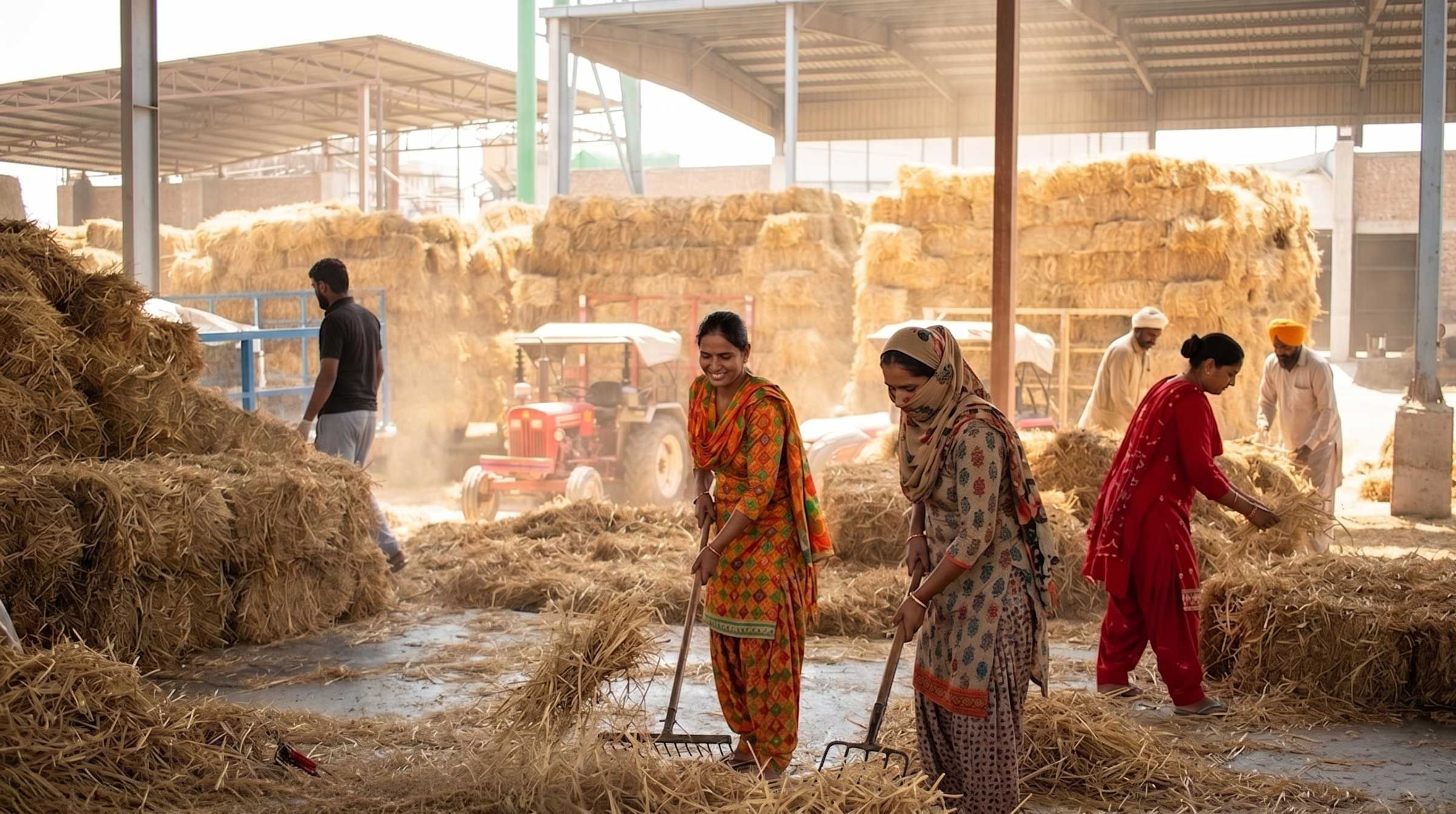
Fashion brands including H&M Group, C&A and Reformation have produced finished garments from lyocell fibre made from agricultural waste - specifically wheat straw that Indian farmers would otherwise burn - in a pilot that its organisers say demonstrates a viable new use for one of the world's largest crop residue streams.
Farmers in India burn an estimated 90 million tonnes of crop residue a year, primarily rice and wheat straw. The burning drives seasonal air pollution across Punjab and the wider Delhi region, where levels of fine particulate matter (PM2.5) have in recent years measured 15 to 45 times above World Health Organisation safety guidelines. Project Latvus, a collaboration between environmental nonprofit Canopy, innovation platform Fashion for Good and the three brands, set out to test whether this waste stream could be converted into dissolving pulp for textile fibre production. Its findings, published on 26 May, show that it can.
Viscose and lyocell are man-made cellulosic fibres (MMCFs) used widely in dresses, T-shirts, blouses, activewear and sleepwear as alternatives to cotton and polyester. The fibres are made by dissolving cellulose pulp and extruding it into filaments, and global production has more than doubled since 1990 to around 7.2 million tonnes a year. Most of that pulp currently comes from trees - Canopy estimates that more than 300 million are felled annually to produce MMCFs, including from ancient and biodiversity-rich forests. Using crop residue as an alternative feedstock would reduce pressure on forests while diverting waste that is currently a public health hazard.
Wheat straw was baled in Punjab and Haryana and shipped to Finnish biorefinery company Chempolis in Oulu, where it was pulped using the company's formico process. The pulp was then spun into staple lyocell fibre at the Thuringian Institute of Textile and Plastics Research (TITK) in Germany, converted into yarn, and woven or knitted into fabric by supply-chain partners. The resulting garments included T-shirts, womenswear blouses and sweaters.
The wheat-straw pulp matched the purity of conventional wood-based dissolving pulp, and the fabrics handled similarly to standard lyocell, with acceptable dye uptake and no major quality concerns from most participating partners. There were limitations at pilot scale - pulp yields were lower than expected, and the yarn showed slightly lower strength and some hairiness - but the report says both are expected to resolve at larger production volumes. At industrial scale, wheat-straw lyocell is projected to achieve cost parity with wood-based alternatives, strengthened by the recovery of co-products including sulphur-free lignin and acetic acid.
The next step is a techno-economic assessment of commercial-scale production. Canopy is calling on fashion brands to pool demand for non-wood MMCFs to help the technology reach price parity more quickly. Diverting even a fraction of India's crop residue into pulp production would create a new income stream for farming communities while reducing one of the country's most persistent sources of seasonal air pollution.
Nicole Rycroft, founder and executive director of Canopy, said: "By diversifying feedstocks beyond forests, we have a real opportunity to build a more resilient, circular, and low-impact textile industry."


Get our weekly digest
resource.co article ai

How will the government and DMOs address the challenges of including glass in DRS while ensuring a level playing field across the UK?
There's no easy solution to include glass in the DRS while maintaining a level playing field. Potential approaches include a phased introduction of glass, potentially with higher deposits to reflect its logistical challenges. The government and DMOs could incentivise innovation in glass packaging design and subsidise dedicated return points for glass-handling. Exemptions for smaller businesses unable to handle glass might also be necessary. Any successful solution will likely blend several approaches. It must address the differing priorities of devolved administrations, balance environmental benefits with logistical and cost implications, and be supported by robust consumer education campaigns emphasizing the importance of glass recycling.