

Review commissioned by the beverage carton industry argues PackUK's volume-based fee model overstates the space fibre-based composites occupy in collection vehicles, inflating disposal fees by up to £92 per tonne.
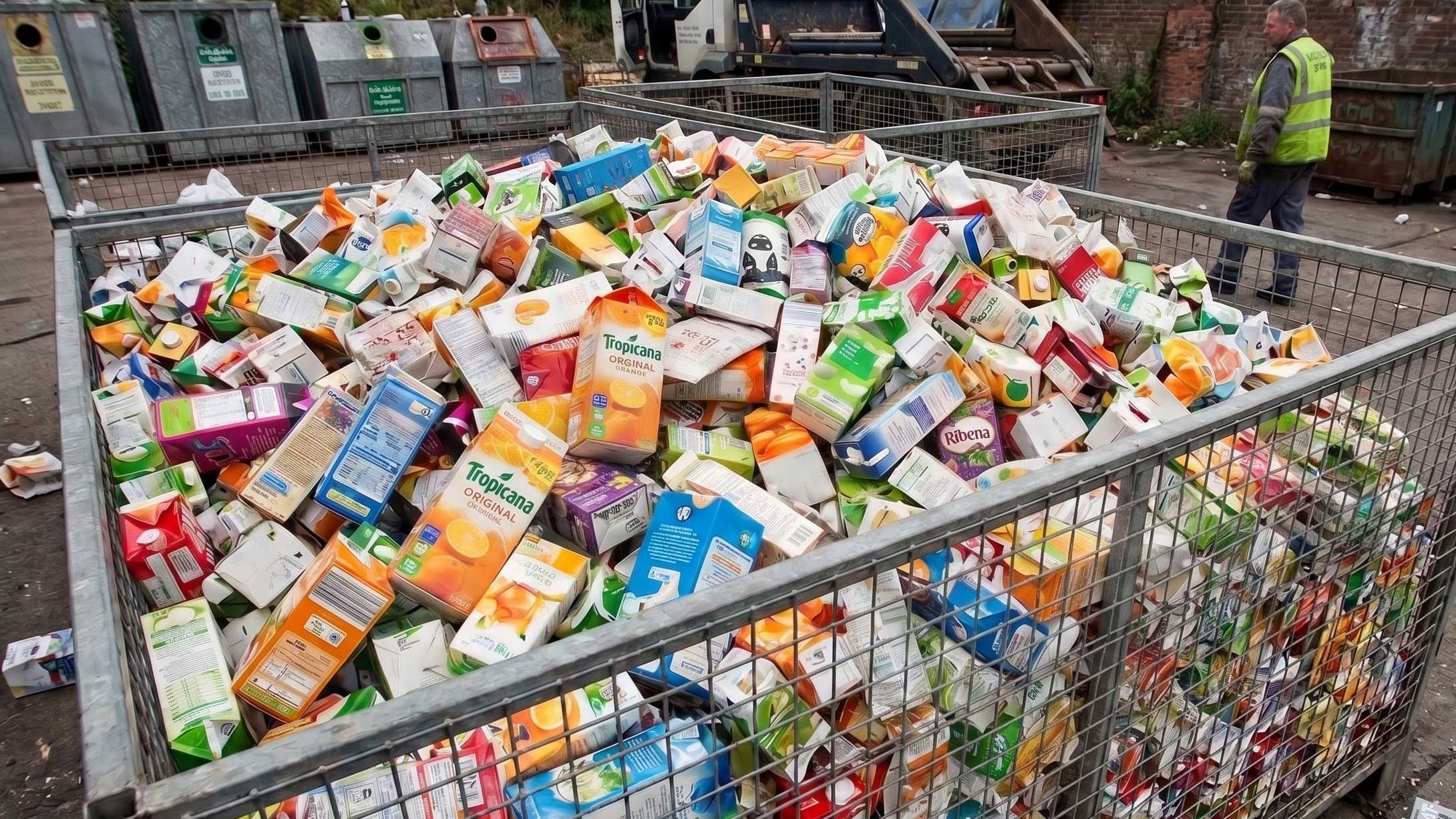
Producers of fibre-based composite (FBC) packaging may have overpaid between £6.3 million and £13.7 million in pEPR disposal fees during the scheme's first year, according to a review by compliance scheme Beyondly commissioned by ACE UK - the Alliance for Beverage Cartons and the Environment.
The review, submitted to PackUK, concludes that the £461 per tonne disposal fee charged for FBCs in 2025 has been incorrectly calculated. Beyondly's analysis puts the overcharge at between £34 and £92 per tonne, depending on which data assumptions are corrected.
FBCs include liquid cartons, sandwich wrappers and ready meal containers. At £461 per tonne they attracted the highest disposal fee of any packaging material in the scheme's first year, above plastic at £423 per tonne.
The central issue is how PackUK calculates collection costs, which account for nearly two-thirds of FBC waste management costs. Collection charges are apportioned by volume rather than weight, and the current model charges £509 per tonne to collect FBCs compared with £264 per tonne for paper and card. Beyondly argues this gap is far wider than the physical properties of the two categories justify.
Two assumptions in the model appear to overstate the volume FBCs occupy in collection vehicles. The first relates to the split between liquid and non-liquid packaging within the FBC category. The model assumes a higher proportion of liquid cartons than Beyondly's data indicates, and liquid cartons take up more space per tonne than other FBC formats such as sandwich sleeves and ready meal trays.
The second concerns bulk density. Non-liquid FBCs are currently assigned the same bulk density as the paper and card category, which is dominated by corrugated cardboard boxes. Lighter retail packaging formats that make up most kerbside FBC waste are denser than corrugated board, meaning they occupy less space per tonne in a collection vehicle.
"The current fee of £461 per tonne appears to be disproportionately high for fibre-based composites," said Charlotte Davies, senior consultant for resource efficiency and circularity at Beyondly. "Since recyclate collection costs represent nearly two-thirds of FBC waste-management costs and are apportioned by volume, both factors inflate the volume allocated to FBC waste and therefore the proportion of collection cost it bears."
Beyondly estimates that correcting the bulk density and market-split assumptions alone would reduce the disposal fee by approximately eight per cent.
Compaction and misreporting
Beyond the core collection-cost findings, the review identifies two further issues that may compound the overcharge.
PackUK's model assumes liquid cartons are never compacted during collection, either by consumers or by collection vehicles. Beyondly argues this overstates the volume these materials occupy in the waste stream, since cartons take up considerably more space when unflattened. The report estimates that accounting for compaction could reduce fees by a further 10 per cent, though this would require additional research and a change in PackUK's methodology.
The review also raises concerns about misreporting of FBCs as paper and card. Many packages in the two categories are similar in appearance and performance, and Beyondly's early statistical analysis suggests that even modest levels of misclassification could materially affect the fee calculation, though the compliance scheme notes that misreporting alone may not yet explain broader tonnage shifts in the paper and card category.
Ben Powell, head of external affairs at ACE UK, said the report had been submitted to PackUK. "It is clearly implausible to charge nearly twice as much for local authorities to collect a tonne of FBC than a tonne of paper and card," he said. "The impact of this discrepancy alone seems to have cost brands millions of pounds more than it should have done last year."
PackUK is expected to publish final Year 2 disposal fees in the coming weeks. ACE UK said it would continue to work with the scheme administrator to ensure fees are adjusted for 2026-27.


Get our weekly digest
resource.co article ai

How will the government and DMOs address the challenges of including glass in DRS while ensuring a level playing field across the UK?
There's no easy solution to include glass in the DRS while maintaining a level playing field. Potential approaches include a phased introduction of glass, potentially with higher deposits to reflect its logistical challenges. The government and DMOs could incentivise innovation in glass packaging design and subsidise dedicated return points for glass-handling. Exemptions for smaller businesses unable to handle glass might also be necessary. Any successful solution will likely blend several approaches. It must address the differing priorities of devolved administrations, balance environmental benefits with logistical and cost implications, and be supported by robust consumer education campaigns emphasizing the importance of glass recycling.