

Queen's University Belfast leads a £2.9 million Ayrton Fund partnership developing lower-impact chemistry to recover gold, copper and rare earths from electronic waste in Malaysia.
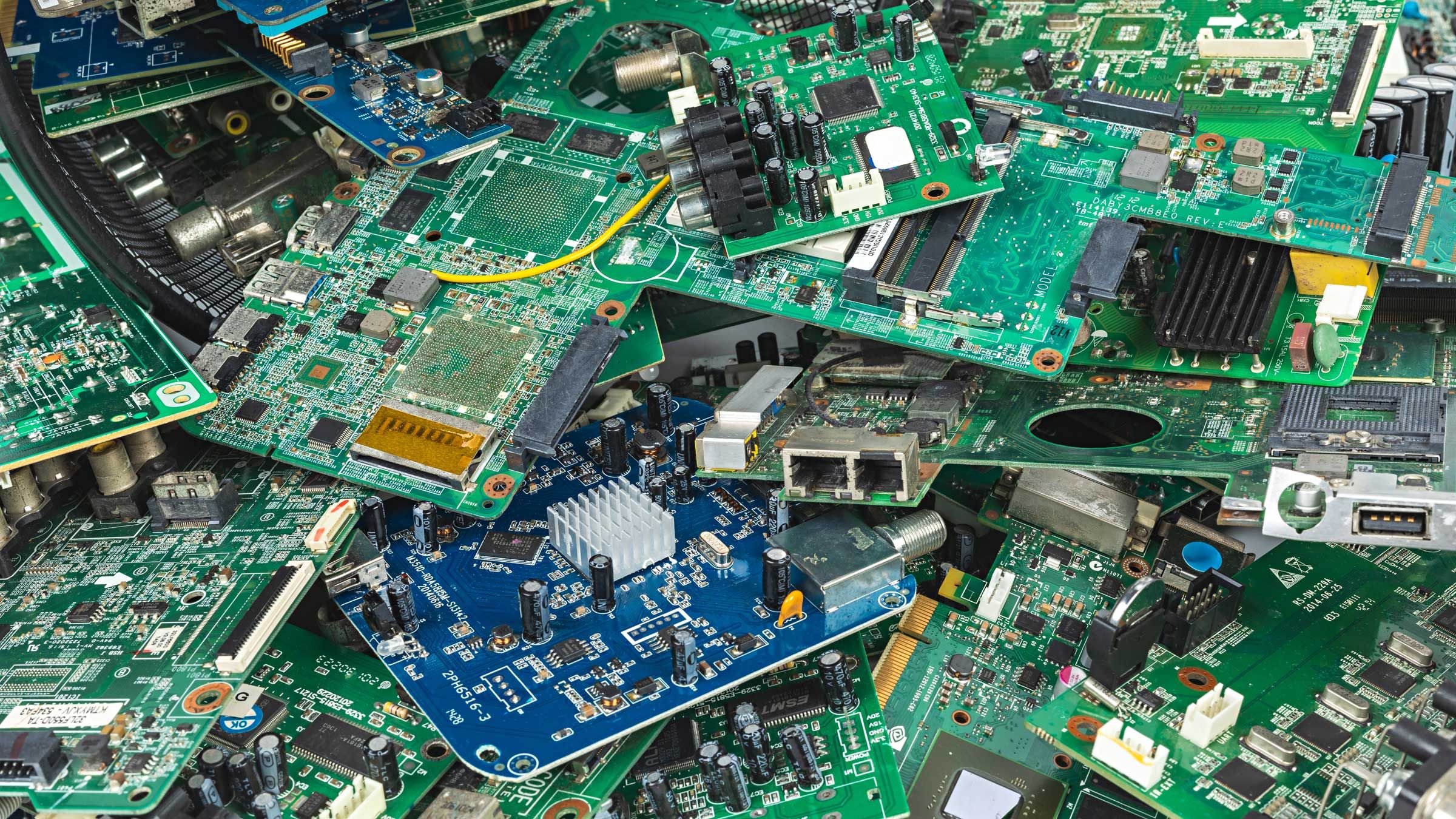
Researchers at Queen's University Belfast are leading a £2.9 million international project to recover precious and critical metals from electronic waste in Malaysia, where an estimated 365,000 tonnes of discarded devices are generated each year. The team reported first-year progress ahead of a UK-Malaysia symposium in Belfast this month.
Queen's has been awarded £2.3 million of the funding and leads the project, known as iRECYCLE-Malaysia, with partners at Universiti Teknologi PETRONAS and University of Malaya. The work is supported by the UKRI Ayrton Fund Challenge Programme, which funds research partnerships between UK institutions and counterparts in developing countries. Malaysia is projected to generate as much as 1.4 million tonnes of e-waste a year by 2030.
Chemists at the university's School of Chemistry and Chemical Engineering are developing electroleaching and mild leaching methods to extract gold, copper and rare earth elements from circuit boards and components, using lower-impact chemistry than conventional smelting and acid recovery. At the same time, researchers in the School of Mechanical and Aerospace Engineering are working in parallel on ways to separate and reuse the polymer parts of printed circuit boards.
Recovering metals from e-waste already happens in Malaysia, well outside the laboratory. Around 75 per cent of it is worked over by informal recyclers who burn cabling for the copper and use acid to pull gold off circuit boards, releasing the lead, mercury and cadmium the devices contain. The chemistry being developed at Queen's runs at lower temperatures and is meant to do the same job without the pollution.
Malaysia banned the import of electronic waste in February 2026, with the government stating the country would not be a "dumping ground" for the waste of wealthier nations. The move followed years of illegal imports that the global waste trade watchdog Basel Action Network has described as an almost "invisible tsunami" flowing into South East Asia. The project is engaging directly with the informal sector to support a shift towards safer, formalised processing.
"In Malaysia, the volume of e-waste is vast, and growing," said Peter Nockemann, professor of inorganic and materials chemistry at Queen's and the project's lead. "It is a huge global problem as e-waste can contain lead, mercury and cadmium. However, there is also a massive opportunity: e-waste contains many precious and critical metals."
The iRECYCLE-Malaysia partners held the first UK-Malaysia E-Waste Futures Symposium in Kuala Lumpur in December 2025. A second meeting takes place in Belfast in June 2026, bringing together researchers, policymakers and industry partners from both countries to review progress on metal recovery, plastics separation and the scale-up needed to move the processes from the laboratory towards industry.


Get our weekly digest
resource.co article ai

How will the government and DMOs address the challenges of including glass in DRS while ensuring a level playing field across the UK?
There's no easy solution to include glass in the DRS while maintaining a level playing field. Potential approaches include a phased introduction of glass, potentially with higher deposits to reflect its logistical challenges. The government and DMOs could incentivise innovation in glass packaging design and subsidise dedicated return points for glass-handling. Exemptions for smaller businesses unable to handle glass might also be necessary. Any successful solution will likely blend several approaches. It must address the differing priorities of devolved administrations, balance environmental benefits with logistical and cost implications, and be supported by robust consumer education campaigns emphasizing the importance of glass recycling.